















Residential Fire Suppression

High-pressure water mist for diesel generators, plant rooms and engine rooms on land and at sea. Compact, fast-acting protection for the critical power and machinery your operation depends on.
Water mist or sprinklers: independent advice, design and installation
As a commercial fire suppression specialist, we design and install both water mist and sprinkler systems, so we can recommend what actually suits your building, budget and fire strategy.
LPCB-certified water mist nozzles and in-house compliance expertise
Our commercial water mist systems use LPCB-certified nozzles. Our in-house compliance team prepares statements of equivalence and works directly with fire engineers, approved inspectors and fire authorities.
Full BIM coordination in Revit and AutoCAD
We coordinate fire suppression design with M&E and other services using BIM, cutting clashes on site and helping consultants and main contractors keep projects on programme.
UK water mist manufacturer with nationwide installation
We’re a SafeContractor-approved, British manufacturer of water mist fire suppression systems, supplying, installing and maintaining commercial systems across the UK through our accredited network.
Generators and engine rooms combine fuel, hot surfaces and machinery in a confined space. A fuel spray onto a hot exhaust can ignite in seconds, and a fire can take out the very power supply a hospital, data centre or vessel relies on in an emergency.
SmartMist's high-pressure water mist systems protect diesel generators, industrial engine rooms and ships' engine rooms. Systems deploy automatically when detectors sense excess heat, can link to a detection system or be operated manually, and cool the fire and surrounding machinery with very little water. On a vessel, where the fire brigade can't be called, the system has to work alone.
Two sites with the same floor area can need very different systems. These are the factors we look at first.
Diesel sprayed or leaked onto hot exhausts and turbochargers is a classic ignition source and spreads fast.
Mist systems are tested by enclosure volume, with separate protocols above and below 260 m³.
Many engine rooms run unattended. Automatic activation and alarms are essential.
Generators backing up hospitals and data centres can't fail when they're needed most.
Ventilation, fuel supply and the engine should shut down when the system activates so the fire can't reignite.
Plant rooms and engine rooms are tight. Mist needs far smaller pipework and tanks than sprinklers.
It's rarely named in Building Regulations, but fire strategies, insurers and, at sea, maritime rules often require it, especially where the generator provides critical power.
FM Approvals' water mist standard includes machinery spaces and turbines. Approved systems are tested against real engine room fire scenarios.
European test protocols for water mist protecting machinery in enclosures above and below 260 m³.
Ships' machinery spaces are protected under SOLAS, with IMO guidelines setting the test standard for water-based systems.
We install both, so we recommend whichever meets your design standard with the least water and plant space.
High-pressure water mist cools the fire, the fuel and the surrounding machinery quickly, using up to 90% less water than traditional sprinklers. Compact pipework and small tanks fit tight plant rooms, and there's minimal water damage to sensitive equipment.
Explore commercial water mist →Deluge and sprinkler systems are sometimes used for large plant halls, and gas systems for sealed enclosures. We'll recommend the right approach for your enclosure, and integrate it with ventilation and fuel shut-off.
Explore commercial sprinklers →We survey the room, the generator or engine and how it's ventilated and fuelled. The system is designed to the enclosure size and coordinated with detection, ventilation and shutdown.
Installation is planned around your refurbishment or maintenance schedule, working alongside your engineers.
Nozzle layout sized to the room or enclosure.
Heat or flame detection for automatic release.
Fuel, ventilation and engine shutdown on activation.
Small tanks or cylinders for tight spaces.
Which standard applies depends on the system, the building and, often, your insurer.
FM Approvals water mist standard, including machinery spaces and turbines.
Water mist test protocol for machinery in enclosures over 260 m³.
Water mist test protocol for machinery in enclosures up to 260 m³.
Design, installation and maintenance framework for water mist systems.
Guidelines for water-based fire extinguishing systems in ships' machinery spaces.
This page explains typical requirements. It isn't a fire strategy or design specification.
UK designed and built
Water mist and sprinkler systems
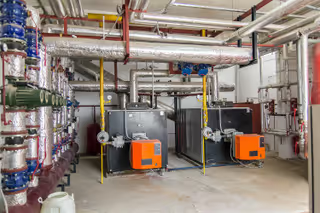
Hospital, Generator, London
In a significant refurbishment project, a prestigious private hospital in St Johns Wood upgraded its critical infrastructure, including the installation of a new diesel generator. SmartMist was chosen to equip the generator with a state-of-the-art water mist fire suppression system, ensuring the highest level of fire safety for the hospital’s crucial power source.
Send drawings and the fire strategy. We'll confirm the likely system and design standard.
Layouts, hydraulic calculations and documents for your insurer and Building Control.
Planned around your build programme or operating hours.
Testing, handover pack and a maintenance plan from day one.
Commercial systems need an annual service, plus the routine owner checks the design standard sets. We test pumps and valves, check heads and nozzles for damage and obstruction, and provide the service records insurers expect. We also maintain systems installed by other contractors.
Service & maintenance plans →Most projects are quoted after a drawing review.
Read our cost guide →It's rarely named in Building Regulations, but fire strategies and insurers often require it, especially where a generator provides critical power for a hospital or data centre. On vessels, maritime rules require fixed protection in machinery spaces.
Mist cools the fire, the fuel and hot machinery, which helps stop reignition. It doesn't need a fully sealed room, and the water supply is cheap to replenish.
Mist uses very little water and cools rather than drenches. In our St John's Wood hospital project, minimal water damage to sensitive equipment was a key reason mist was chosen.
Yes. We protect engine rooms on pleasure craft, yachts and commercial vessels, where the system has to work without the fire brigade.
Yes. We offer a full service including design, installation, commissioning, scheduled maintenance, compliance checks, and emergency support.
Yes. We can inspect, upgrade, and maintain existing mist or sprinkler systems to bring them in line with current regulations and performance expectations.
We plan every installation carefully to minimise disruption. Work can be phased or scheduled outside business hours to maintain normal operations where possible.
Our commercial water mist systems are designed to BS EN 14972-1, and our commercial sprinkler systems to BS EN 12845.
For residential projects, our sprinklers are designed to BS 9251. Our SmartMist DOME™ residential water mist system has met the performance criteria of the BS EN 14972-17:2025 open room fire test (3.5 m room height) at the FPA, a UKAS-accredited fire test laboratory, and every installation is designed to BS EN 14972-1. We also work to project and insurer requirements.
We assess your fire strategy, occupancy type, building design, and water supply. Based on this, we may recommend high-pressure mist, low-pressure mist, wet or dry sprinkler systems, or a hybrid approach.
We recommend annual servicing in line with BS 9251, BS EN 14972-1 or BS EN 12845, depending on the system type. In high-risk or heavily used environments, more frequent checks may be required.
Yes. SmartMist offers both advanced water mist systems and traditional commercial sprinkler systems. We recommend the most suitable option based on your building’s fire strategy, layout, risk profile, and water supply.
Send what you have. These help us quote faster:
Or call 0330 113 5900

