
















Residential Fire Suppression

Water mist suppression and flame detection for waste transfer, recycling and waste-to-energy sites. Designed to meet your fire prevention plan, your insurer and the Environment Agency, and to keep plant running 24/7.

Water mist or sprinklers: independent advice, design and installation
As a commercial fire suppression specialist, we design and install both water mist and sprinkler systems, so we can recommend what actually suits your building, budget and fire strategy.
LPCB-certified water mist nozzles and in-house compliance expertise
Our commercial water mist systems use LPCB-certified nozzles. Our in-house compliance team prepares statements of equivalence and works directly with fire engineers, approved inspectors and fire authorities.
Full BIM coordination in Revit and AutoCAD
We coordinate fire suppression design with M&E and other services using BIM, cutting clashes on site and helping consultants and main contractors keep projects on programme.
UK water mist manufacturer with nationwide installation
We’re a SafeContractor-approved, British manufacturer of water mist fire suppression systems, supplying, installing and maintaining commercial systems across the UK through our accredited network.
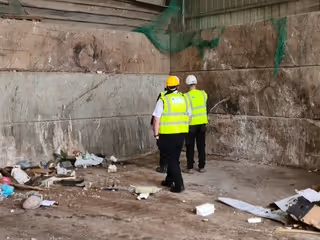
Waste facilities have many fire hazards that ignite easily and have historically been hard to extinguish. One of the biggest risks today is lithium-ion batteries thrown away in general waste, which get crushed on conveyors, spark and ignite.
SmartMist designs, installs and services high-pressure water mist systems for waste management, recycling and waste-to-energy plants. Systems activate automatically at a set temperature, can link to flame detection such as SmartVision, and can also be operated manually. They are built for 24/7 operations and designed to meet the requirements of your insurer and the Environment Agency.

Two sites with the same floor area can need very different systems. These are the factors we look at first.
Lithium-ion batteries in general waste are crushed and puncture on conveyors and in shredders, causing many waste site fires.
Fire travels along conveyors into other parts of the plant. Systems often link to the emergency shutdown to stop the line.
Pile size, separation and storage time are set by your fire prevention plan. Waste stored inside a building needs suppression.
Flame and heat detection spot a fire in seconds. Linking detection to suppression cuts response time.
Water demand sets tank size, and fire water run-off has to be contained. Mist uses far less water than sprinklers.
Plants run around the clock. Installation and servicing are planned around shifts and shutdowns.
If you store combustible waste under an environmental permit you need a fire prevention plan, and the Environment Agency expects suppression where waste is stored in a building.
Permitted sites storing combustible waste need a fire prevention plan. It must show a fire can be extinguished within 4 hours, and suppression is required where waste is stored in a building.
The Waste Industry Safety and Health Forum's guidance on reducing fire risk at waste sites is widely used by operators and insurers.
Insurers often set the standard for detection and suppression at waste sites, and many won't cover a plant without it.
We install both, so we recommend whichever meets your design standard with the least water and plant space.
High-pressure water mist uses up to 90% less water than traditional sprinklers, so tanks are smaller and less fire water run-off needs containing. Fine droplets cool burning material quickly, and systems can be sectioned to protect individual conveyors, shredders and storage bays.
Explore commercial water mist →Deluge and sprinkler systems are used across large tipping halls and storage areas, often specified by insurers. Where they're the right fit, we design and install them, and integrate them with flame detection and the plant's shutdown.
Explore commercial sprinklers →Waste site systems are designed from a survey of how material moves through your plant. We size water supply and tanks against your fire prevention plan, and coordinate with your fire detection supplier and plant controls.
Installation is phased around shifts and planned shutdowns, and systems are serviced and wet-tested once handed over.
Links to SmartVision or your detection system for fast activation.
Separate zones for conveyors, shredders and bays, with reporting.
Stops conveyors when the system activates.
Dedicated tanks, with fire additive where specified.
Which standard applies depends on the system, the building and, often, your insurer.
Environment Agency guidance for permitted sites storing combustible waste.
Industry guidance on reducing fire risk at waste management sites.
Design, installation and maintenance framework for water mist systems.
Automatic sprinkler design, used for some storage and tipping halls.
Requires a suitable fire risk assessment for the site.
This page explains typical requirements. It isn't a fire strategy or design specification.
UK designed and built
Water mist and sprinkler systems

Waste Transfer, Europe
The waste and recycling sector is amongst the most active sectors in Europe, with a value of over £30bn in 2020. However, in recent years with increased production and disposal of electronics, there are a number of high-risk areas that can have drastic knock-on effects within large plants across the UK.
One particular area of risk is fires caused by batteries which have been incorrectly disposed of in normal waste methods, rather than using correct e-waste recycling methods across the UK.
These fires start when batteries fall from waste conveyor belts and get caught in the roller bars underneath, often getting crushed, sparking, exploding and carrying a huge fire risk into general machinery spaces and along conveyors.
Send drawings and the fire strategy. We'll confirm the likely system and design standard.
Layouts, hydraulic calculations and documents for your insurer and Building Control.
Planned around your build programme or operating hours.
Testing, handover pack and a maintenance plan from day one.
Commercial systems need an annual service, plus the routine owner checks the design standard sets. We test pumps and valves, check heads and nozzles for damage and obstruction, and provide the service records insurers expect. We also maintain systems installed by other contractors.
Service & maintenance plans →Most projects are quoted after a drawing review.
Read our cost guide →If you store combustible waste under an environmental permit, you need a fire prevention plan. The Environment Agency expects suppression where waste is stored in a building, and the plan must show a fire can be extinguished within 4 hours. Insurers often go further.
Lithium-ion batteries in general waste are a major cause. They get crushed or punctured on conveyors and in shredders, spark and ignite the material around them.
Yes. Our systems can be triggered by flame detection such as SmartVision, so suppression starts within seconds of a fire being detected. They can also link to the plant shutdown to stop conveyors.
It depends on the areas protected and your fire prevention plan. High-pressure water mist uses far less water than sprinklers, which means smaller tanks and less fire water run-off to contain.
Yes. We offer a full service including design, installation, commissioning, scheduled maintenance, compliance checks, and emergency support.
Yes. We can inspect, upgrade, and maintain existing mist or sprinkler systems to bring them in line with current regulations and performance expectations.
We plan every installation carefully to minimise disruption. Work can be phased or scheduled outside business hours to maintain normal operations where possible.
Our commercial water mist systems are designed to BS EN 14972-1, and our commercial sprinkler systems to BS EN 12845.
For residential projects, our sprinklers are designed to BS 9251. Our SmartMist DOME™ residential water mist system has met the performance criteria of the BS EN 14972-17:2025 open room fire test (3.5 m room height) at the FPA, a UKAS-accredited fire test laboratory, and every installation is designed to BS EN 14972-1. We also work to project and insurer requirements.
We assess your fire strategy, occupancy type, building design, and water supply. Based on this, we may recommend high-pressure mist, low-pressure mist, wet or dry sprinkler systems, or a hybrid approach.
We recommend annual servicing in line with BS 9251, BS EN 14972-1 or BS EN 12845, depending on the system type. In high-risk or heavily used environments, more frequent checks may be required.
Yes. SmartMist offers both advanced water mist systems and traditional commercial sprinkler systems. We recommend the most suitable option based on your building’s fire strategy, layout, risk profile, and water supply.
Send what you have. These help us quote faster:
Or call 0330 113 5900

